
Website Conversion Rate Problems? 8 Quick Solutions
Learn practical solutions to boost your website’s conversion rates with quick fixes and data-driven strategies.
Editorial Team
Heaviside Digital

Here’s how to fix it fast:
- Improve CTAs: Clear, action-driven buttons can increase conversions by up to 25%.
- Speed Up Your Site: 40% of users leave if a page takes over 3 seconds to load. Optimize images, use caching, and a CDN.
- Simplify Navigation: Poor navigation can slash conversions by 50%. Keep menus intuitive and mobile-friendly.
- A/B Test Everything: Headlines, CTAs, images – test them all to find what works.
- Personalize User Experience: Tailor content for different audiences based on behavior and location.
- Use Heat Maps: Spot where users click and drop off to fix problem areas.
- Add Live Chat: Real-time support reduces cart abandonment.
- Smart Pop-Ups: Use exit-intent or time-based pop-ups to highlight offers without annoying users.
Quick Comparison
Focus Area
Problem
Solution
Impact
Page Load Speed
Slow loading increases bounce rates by 32%
Compress images, use CDN, optimize code
High
CTAs
Vague buttons reduce conversions by 25%
Use clear, action-oriented text
Medium-High
Navigation
Complex menus cut conversions by 50%
Simplify structure, ensure mobile usability
High
A/B Testing
Guessing what works
Test headlines, CTAs, forms
Long-term Growth
Personalization
Generic experiences
Show content based on user behavior
Medium
Start with these steps to improve your website’s performance today.
The Anatomy Of A High Converting Landing Page
Understanding Conversion Rate Optimization (CRO)
CRO is all about improving how effectively your site turns visitors into customers. Think of it as fine-tuning your website to make the most of your traffic.
What Is CRO?
CRO is a data-driven approach that focuses on boosting the percentage of visitors who take specific actions – like buying a product, signing up for a newsletter, or requesting a demo. It’s like having a personal trainer for your site, helping it perform better at every stage of the conversion funnel. According to, this process involves optimizing each touchpoint while staying updated on [new trends ].
Here’s a quick look at how different factors affect conversion rates:
Element
Impact on Conversion
Page Load Speed
A one-second delay can cut conversions by 7%
User Experience
Shapes how visitors engage and take action
Call-to-Action
Unclear CTAs can reduce conversions by 25%
Main Parts of CRO
Effective CRO relies on three main areas:
1. Data Analysis
Using tools like, you can track user behavior to see where visitors drop off and what content keeps them engaged.
2. A/B Testing
Experiment with different versions of buttons, headlines, layouts, or forms to figure out which ones lead to better results.
3. User Experience Improvements
A poor user experience can significantly [hurt conversions ]. Focus on:
- Simplified navigation
- Clear messaging about your value
- Mobile-friendly design
- Quick page load times
CRO isn’t a one-and-done task. It’s a continuous effort to refine and improve your website’s performance over time. By diving into these core areas, you’ll be ready to turn more visitors into loyal customers.
8 Ways to Boost Website Conversion Rates
1. Improve Call-to-Action (CTA) Buttons
Place your CTAs where they’ll get noticed – think high-visibility spots on your site. Use action-focused language that encourages clicks, like "Get Started Now" or "Claim Your Offer." Make sure they stand out visually so users can’t miss them. Studies show that unclear CTAs can drop conversions by as much as 25%, so keep them clear and direct.
2. Speed Up Page Load Times
Did you know that 40% of users abandon a site if it takes more than 3 seconds [to load ]? To avoid this, focus on optimizing your site’s performance. Here are a few tips:
- Compress images to reduce file size without losing quality.
- Combine files to cut down on server requests.
- Use a Content Delivery Network (CDN) to speed up delivery.
- Minimize JavaScript and CSS files.
Once your site loads quickly, ensure it’s easy to navigate so users stick around.
3. Make Website Easier to Use and Navigate
A simple, intuitive website structure helps users find what they’re looking for fast. Keep your navigation paths logical and ensure your site is mobile-friendly. Your menu should make sense, with key pages accessible within 2-3 clicks.
4. Use A/B Testing
A/B testing lets you experiment with different elements to see what works best for your audience. For example, you can test headlines, CTA placements, or form lengths to boost engagement and conversions.
Element
What to Test
Impact Focus
Headlines
Length and tone
Engagement
CTAs
Color and placement
Click-through rates
Images
Size and style
Visual appeal
Forms
Number of fields, layout
Completion rates
The insights you gain can also help tailor experiences for specific user groups.
5. Tailor User Experience
Use visitor data to customize the experience for different audiences. For instance, show content based on location or recommend products based on browsing history. Personalization can make users feel more connected to your brand.
6. Analyze User Behavior with Heat Maps
Heat maps are a great tool for understanding how users interact with your site. They show where people click, how far they scroll, and where they get stuck. This data helps you figure out what’s working – and what needs fixing.
7. Add Live Chat and Support
Offering real-time support can lower cart abandonment and build trust. Add a live chat widget in a spot that’s easy to find but doesn’t disrupt the user experience. Quick answers can make the difference between a sale and a lost customer.
8. Use Pop-Ups and Incentives
Pop-ups, when used wisely, can grab attention without annoying users. Try options like exit-intent pop-ups, time-based messages, or scroll-triggered offers. These can highlight discounts, newsletter sign-ups, or special deals to keep users engaged. Just don’t overdo it – too many pop-ups can drive people away.
sbb-itb-fa66596
Tools and Resources for Conversion Rate Optimization
!(https://mars-images.imgix.net/seobot/screenshots/heaviside.digital-e1fe4e31df08698b7085f740d4de8c46.jpg? auto=compress) offers tailored CRO solutions starting at $995/month, featuring AI-driven analytics, unlimited updates, and advanced automation tools. Their approach integrates SEO, PPC, and real-time data insights to boost conversions. By continuously monitoring performance, they adjust strategies on the fly, ensuring steady improvements in conversion rates.
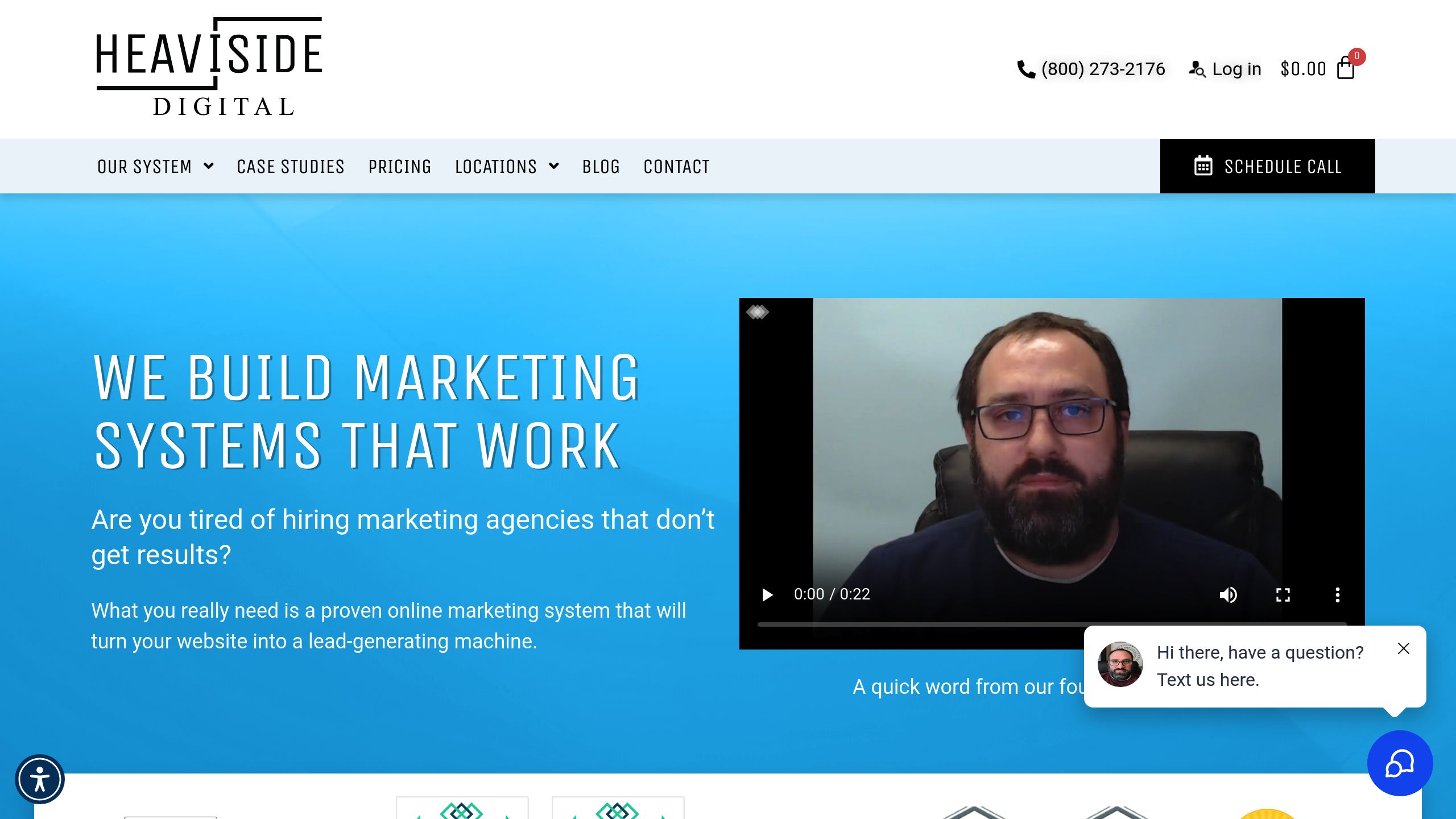
Focusing on common CRO challenges like page speed and clear CTAs, Heaviside Digital helps businesses turn potential issues into growth opportunities. Their tools also support managing multiple locations and automating marketing tasks, making it easier to scale optimization efforts across various markets.
Useful CRO Tools
The right tools can make all the difference in your CRO efforts. Here’s a breakdown of some key tools to consider:
Tool Category
Recommended Tools
Primary Use Cases
Key Features
Building and testing landing pages
No coding needed, includes A/B testing
Analyzing form completion rates
Pinpoints where users abandon forms
Collecting user feedback
Provides real-time insights
Tracking user journeys
Highlights barriers to conversions
When selecting CRO tools, focus on those that align with your current tech stack and address specific pain points in your funnel. Start with foundational analytics tools to get a clear picture of your performance, then add specialized tools as your needs grow.
With expert guidance and the right tools – like those from Heaviside Digital – businesses can turn conversion challenges into measurable growth.
Conclusion
Improving conversion rates isn’t just about quick fixes – it requires the right tools, strategies, and a commitment to ongoing improvements. The eight solutions discussed earlier offer a clear path to better website performance and more conversions.
Key Takeaways
Tackling conversion challenges head-on is essential for turning website visitors into customers.A data-driven approach is at the core of success, with 71% of companies using A/B testing as a key part of their [optimization efforts ].
Here’s a quick implementation guide to help you prioritize:
Priority Level
Focus Area
Expected Impact
Timeline
Immediate
Page Speed & CTAs
High – Boosts user engagement instantly
1-2 weeks
Short-term
UX & Navigation
Medium-High – Keeps users on your site
2-4 weeks
Ongoing
A/B Testing & Analytics
Long-term – Drives continuous growth
Continuous
Strategic
Live Chat & Incentives
Medium – Builds trust and loyalty
1-3 months
Start with your high-traffic pages to see [quicker results ]. These areas offer the most potential for immediate improvements, making them a smart first step in your conversion strategy.
FAQs
If you’re dealing with low conversion rates, here are some practical answers to common questions that can help you tackle the issue.
How to fix a low conversion rate?
Improving low conversion rates involves tweaking key areas of your website. Below are some effective steps, ranked by their impact:
Priority
Solution
Expected Impact
Critical
Remove distractions (1-2 days): Get rid of oversized headers, sidebars, and cluttered menus to keep users focused on key actions.
High (15-25%)
High
Optimize CTAs (2-3 days): Use clear, action-oriented text and designs that stand out.
Medium-High (10-20%)
Medium
Simplify navigation (3-5 days): Make sure menus are straightforward, and users can reach important pages in three clicks or less.
Medium (8-15%)
Ongoing
Test and refine: Tools like Unbounce can help with A/B testing to adjust your site based on user behavior.
Varies
The quickest way to see results is by simplifying your landing pages and product pages.Remove any unnecessary elements that distract users, and focus on clear, direct paths to the actions you want them [to take ] []. Highlight essential product options and make conversion paths easy to follow.
Using heat maps can pinpoint where users encounter issues, giving you insights to make [data-driven improvements ] []. Combine this with regular A/B testing to refine your site while keeping the elements that already work well.
Related Blog Posts
- (/blog/how-to-create-high-converting-landing-pages-a-step-guide)
- (/blog/email-marketing-roi-5-metrics-that-actually-matter)
- (/blog/google-ads-vs-facebook-ads-cost-and-performance-analysis)
- (/blog/how-to-measure-retargeting-campaign-roi)
Share this article
Help others discover this content
About Heaviside Digital
We help local businesses get found in search and make it easier for a website visitor to contact them. Our work also covers advertising and the follow-up that turns a new lead into a conversation.
Learn more about usContinue Reading

What a Local Rank Grid Actually Tells You About Google Maps
One map ranking can look fine while most of your service area cannot find you. Learn how to read a local rank grid and choose the next action.

How to Use AI Tools to Save Time on Marketing Without Losing Your Voice
Discover how digital marketing agencies can harness AI to draft campaign copy and repurpose client wins faster without producing bland, cookie-cutter content that alienates prospective clients.

Answer Engine Optimization — The SEO Strategy Nobody Is Talking About Yet
For agencies helping local brands scale, traditional SEO tactics are missing half the equation. Dive into Answer Engine Optimization (AEO) tailored for digital marketing firms, and learn how to optimize your agency's online presence to be cited directly by ChatGPT and Google Overviews.