
SEO vs PPC: Which Digital Marketing Strategy Fits Your Business
Explore the differences between SEO and PPC to determine which digital marketing strategy aligns best with your business goals and needs.
Editorial Team
Heaviside Digital
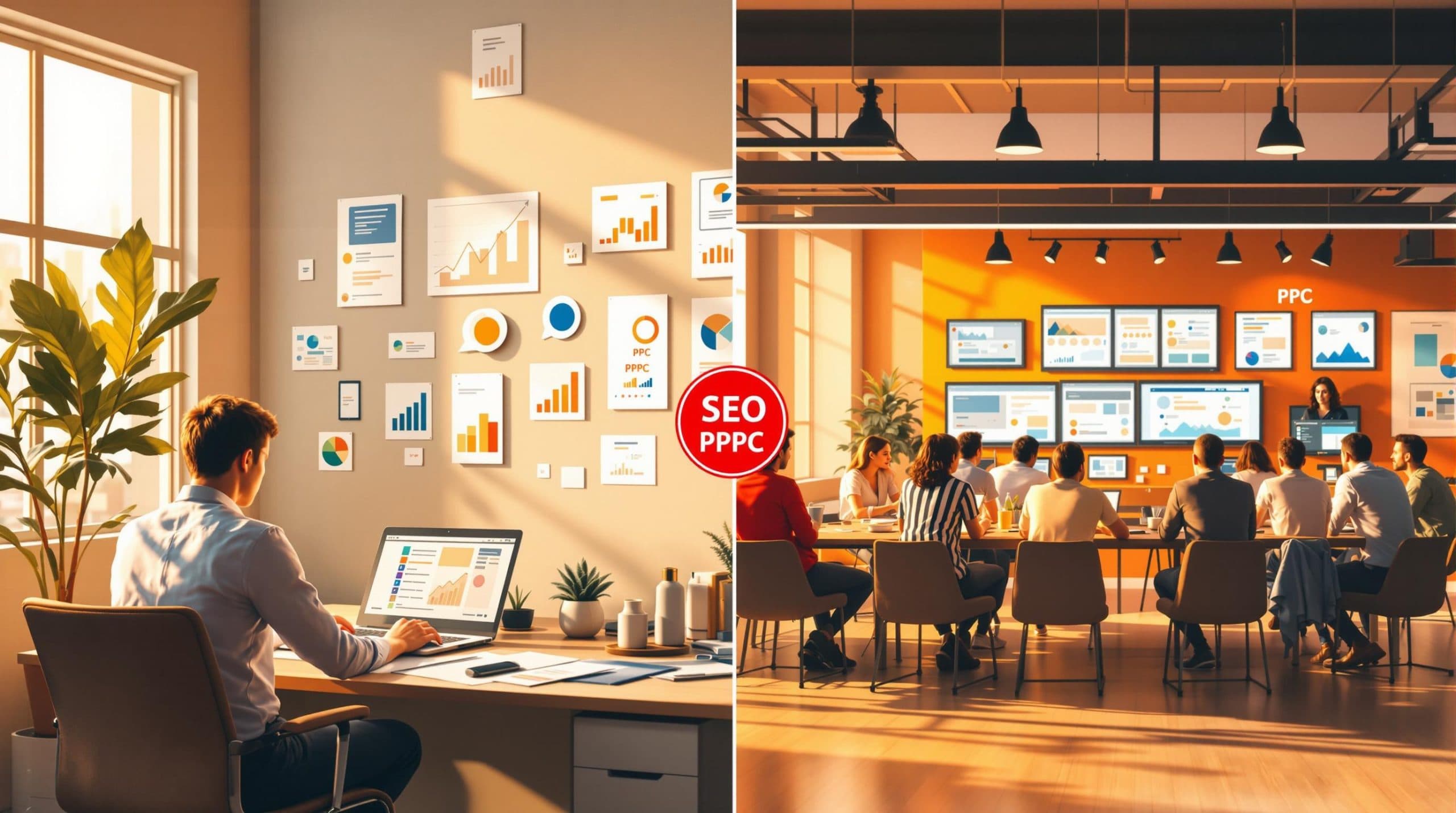
Choosing between and Wikipedia can be tough, but it depends on your business goals. Here’s a quick breakdown:
- SEO: Focuses on long-term organic growth. It takes 3-6 months to show results but offers a higher ROI (500-1,300%) over time. Best for sustainable traffic and lower ongoing costs.
- PPC: Delivers instant visibility with precise targeting. It’s ideal for short-term campaigns like product launches or seasonal promotions but comes with ongoing costs and an average ROI of ~200%.
Quick Comparison
Factor
SEO
PPC
Timeline
3-6 months for results
Immediate results
Cost Pattern
Higher upfront, lower ongoing
Pay-per-click costs
ROI
500-1,300%
~200%
Best For
Long-term growth
Quick, targeted campaigns
Control
Algorithm-dependent
Real-time adjustments
For long-term growth, go with SEO. If you need fast results, PPC is your best choice. Many businesses use a mix of both to balance immediate gains with sustainable traffic.
SEO Basics
Search Engine Optimization (SEO) helps improve a website’s visibility in organic search results by optimizing its structure, content, and authority. This process involves a mix of technical tweaks, targeted content creation, and link-building efforts.
"The key components of SEO include keyword research, on-page optimization (such as meta tags, headings, and content quality), technical SEO (like site speed and mobile-friendliness), and off-page optimization (such as backlink building and [social signals)" ]
SEO focuses on achieving steady, long-term growth. Unlike paid methods, it doesn’t deliver instant results but builds a strong foundation for ongoing organic traffic.
PPC Basics
Pay-Per-Click (PPC) advertising allows businesses to bid on keywords to secure prime search result placements, offering immediate exposure and highly targeted traffic.
Aspect
Details
Cost Structure
Charged per click, ensuring payment only for engaged users
Placement & Timing
Ads appear instantly at the top of search results
Targeting
Allows for precise targeting based on location, demographics, and interests
PPC is powerful for its speed and precision. Advertisers can control when and where their ads appear, making it an excellent choice for campaigns that need quick results.
"PPC works by allowing advertisers to bid on specific keywords. When a user searches for those keywords, the highest bidder’s ad is displayed at the top of the search results. The advertiser is charged each time a user clicks on [the ad" ] []
Both SEO and PPC offer distinct advantages. SEO is ideal for sustainable, long-term visibility, typically taking 3-6 months to show results. On the other hand, PPC delivers instant traffic but requires ongoing investment to maintain. Knowing these differences is key to choosing the right strategy for your goals.
SEO vs PPC: The Ultimate Showdown for Digital Marketing
Comparing SEO and PPC
Let’s break down how SEO and PPC stack up in terms of cost, timelines, and control. This comparison will help you figure out which strategy aligns best with your goals.
Cost Analysis
SEO generally provides a better return over time, with an ROI ranging from 500-1,300%, thanks to ongoing organic traffic that doesn’t come with per-click expenses. PPC, on the other hand, offers a quicker but more costly approach, with an average ROI of about 200%.
Strategy
Cost Structure
Average ROI
Best For
SEO
High initial investment, ongoing maintenance
500-1,300%
Long-term growth
PPC
Low upfront cost, continuous per-click fees
~200%
Immediate results
If your focus is on long-term growth, SEO is the way to go. But if you need fast results, PPC might be the better option.
Results Timeline
"PPC delivers instant traffic, but SEO sustains [traffic long-term" ]
This difference makes PPC perfect for short-term campaigns like product launches or holiday promotions. SEO, however, is better suited for building traffic that lasts and grows over time.
Timing aside, the level of control you have over your campaigns is another important consideration.
Control and Adjustments
The ability to tweak and manage campaigns varies greatly between SEO and PPC. PPC offers more immediate and precise control, making it easier to target specific audiences and adjust budgets on the fly.
Control Aspect
SEO
PPC
Targeting
Algorithm-dependent
Precise demographic and interest-based
Budget Management
Indirect control
Direct daily/monthly limits
Campaign Adjustments
Takes time to show effect
Real-time modifications possible
While SEO relies on search engine algorithms, making it less predictable, it helps build organic traffic that feels more natural. PPC, however, allows for real-time changes to budgets, targeting, and creative elements, making it ideal for campaigns that [demand precision ].
SEO’s ability to sustain organic traffic without recurring costs results in a 25% higher [long-term ROI ]. Whether you choose SEO, PPC, or a mix of both, understanding these differences will help you align your strategy with your business needs.
sbb-itb-fa66596
Choosing the Right Strategy
Opting for SEO
SEO works best for businesses focused on building a lasting online presence. It offers a return on investment (ROI) [of 500-1,300% ], making it a strong choice for those aiming for consistent, long-term growth. This approach is particularly suited for e-commerce sites, service providers, and local businesses looking to gain steady organic visibility.
Opting for PPC
With an average conversion rate of 8.91% compared to SEO’s 1. [61% ], PPC is a great option for businesses that need fast results. It’s especially effective for situations requiring immediate visibility, such as product launches, seasonal promotions, or testing new markets.
Scenario
PPC Advantage
Product Launches
Instant exposure for new products
Seasonal Campaigns
Perfect timing for limited promotions
Market Testing
Rapid feedback on audience targeting
Crisis Management
Quick adaptation to market changes
Using Both Strategies
Can’t decide between SEO and PPC? Combining the two can give you the best of both worlds. PPC delivers instant traffic and valuable keyword data, while SEO builds a foundation for long-term growth. Start with PPC to gain immediate visibility and insights into high-performing keywords. Over time, shift your focus to SEO as your organic traffic grows, keeping PPC for competitive keywords or specific campaigns.
"The combination of SEO and PPC allows businesses to leverage immediate visibility while building sustainable organic growth, creating a more balanced and cost-effective [marketing strategy" ]
Conclusion
Key Takeaways
SEO focuses on building long-term growth through organic traffic, while PPC provides instant visibility and precise audience targeting. The right choice depends on your business goals and resources:
Factor
SEO Strength
PPC Strength
Timeline
Builds organic growth over time
Delivers instant results
Budget
Lower ongoing expenses
Pay per visitor
Control
Relies on algorithms
Offers precise targeting
Conversion Rate
1.61% average
- [91% average ]
Knowing the advantages of SEO and PPC is just the beginning. Success comes from applying this knowledge to meet your specific business goals effectively.
What to Do Next
To choose the best strategy, balance your immediate needs with your long-term objectives:
- Assess your resources: Look at your budget, timeline, and team capabilities.
- Analyze competitors: Identify areas where SEO or PPC can provide an edge.
- Set clear goals: Define measurable outcomes to guide your efforts.
Consider starting with PPC to gain quick insights and data, then shift focus to SEO for sustainable growth. By blending these strategies thoughtfully, businesses can create a marketing plan that delivers real, measurable success.
FAQs
Which is better for your business: SEO or PPC?
The decision between SEO and PPC depends on your business goals, timeline, and available resources. SEO works well for building long-term growth, especially in less competitive markets. On the other hand, PPC is perfect for gaining immediate visibility, particularly for short-term or time-sensitive campaigns.
Factor
SEO
PPC
Timeline
Takes 3-6 months for results
Delivers results immediately
Cost Pattern
Higher upfront, lower over time
Ongoing per-click costs
Control Level
Relies on algorithms
Offers direct targeting control
Best Use
Long-term growth
Quick results and targeted campaigns
Why choose PPC over SEO?
PPC provides precise targeting and immediate results, making it a great choice for:
- Quick testing of markets or ideas
- Time-sensitive promotions or sales
- Launching new products
- Seasonal marketing efforts
- Managing crises or urgent needs
- Competing for high-value keywords
"PPC allows for immediate control and adjustments, as advertisers can specify exactly who sees their ads based on demographics, interests, location, [and more" ]
Which is better: SEO or PPC?
Neither is inherently better – each serves different purposes depending on your business needs. Research shows that 61% of B2B marketers focus on SEO for lead generation, while 45% of small businesses rely on [PPC advertising ].
Your choice should depend on factors like your budget, timeline, competition, and audience behavior. PPC is excellent for quick wins or testing the market, while SEO is better for building a lasting online presence. Many businesses use a combination of both, leveraging PPC data to refine their [SEO efforts ] [].
A balanced approach could include:
- Starting with PPC to gather immediate insights about your market
- Using PPC data to shape your SEO keyword strategy
- Gradually building your SEO presence while maintaining PPC for competitive terms
- Adjusting your strategy based on performance data
Related Blog Posts
- (/blog/local-seo-checklist-10-steps-to-improve-rankings)
- (/blog/email-marketing-roi-5-metrics-that-actually-matter)
- (/blog/social-media-marketing-guide-for-small-business-success)
- (/blog/website-conversion-rate-problems-8-quick-solutions)
Share this article
Help others discover this content
About Heaviside Digital
We help local businesses get found in search and make it easier for a website visitor to contact them. Our work also covers advertising and the follow-up that turns a new lead into a conversation.
Learn more about usContinue Reading
What a Local Rank Grid Actually Tells You About Google Maps
One map ranking can look fine while most of your service area cannot find you. Learn how to read a local rank grid and choose the next action.

How to Use AI Tools to Save Time on Marketing Without Losing Your Voice
Discover how digital marketing agencies can harness AI to draft campaign copy and repurpose client wins faster without producing bland, cookie-cutter content that alienates prospective clients.
Answer Engine Optimization — The SEO Strategy Nobody Is Talking About Yet
For agencies helping local brands scale, traditional SEO tactics are missing half the equation. Dive into Answer Engine Optimization (AEO) tailored for digital marketing firms, and learn how to optimize your agency's online presence to be cited directly by ChatGPT and Google Overviews.